 : For Students, Faculty, and Staff

HSL Monthly Book Displays
Explore the actively growing and vibrant collections at the Health Sciences Library by visiting our monthly book display. The display sits on top of our reference shelf and features many of our newest acquisitions while following a theme. Enjoy this feature of this month’s book display!
A note from Anna
It has been such a joy to be part of putting together the monthly book display for HSL since June 2023. As a staff member at the Wangensteen Historical Library, I don’t get as many opportunities to keep up-to-date with our contemporary collections, and I’ve loved discovering so many fascinating new reads! As I depart from UMN, the book displays will continue, and there will always be more and more interesting new books added to HSL. Take a look this month at some of my top picks from the stacks. Happy reading!
August 2025: Anna’s Farewell Picks
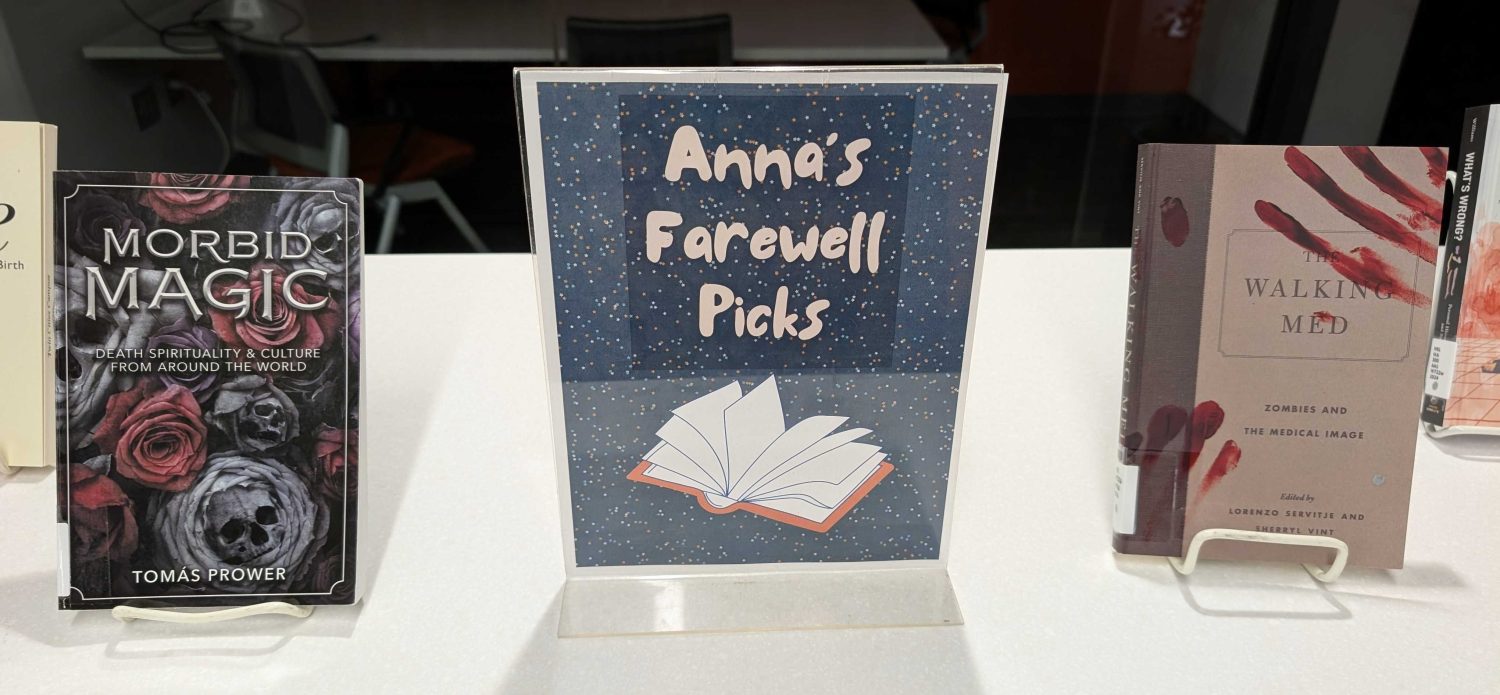
Morbid magic : death spirituality & culture from around the world
Written with a mix of reverence, approachability, and deadpan wit by a funeral industry insider, Morbid Magic is the first multi-cultural guide to death spirituality and traditions from all over the world and from different historical eras. Tomás Prower presents an impressive array of topics, including each culture’s views on the hereafter, mourning periods, the deceased’s legacy, handling of remains, and more.
The walking med : zombies and the medical image
The zombie craze has infected popular culture with the intensity of a viral outbreak, propagating itself through text, television, film, video games, and many other forms of media. Increasingly, they are understood and depicted as a medicalized phenomenon: creatures transformed by disease into a threatening vector of contagion. The Walking Med brings together scholars from across the disciplines of cultural studies, medical education, medical anthropology, and art history to explore what new meanings the zombie might convey in this context.

What’s wrong? : personal histories of chronic pain and bad medicine
What’s Wrong? is author, illustrator, and scientific researcher Erin Williams’s graphic exploration of how the American health-care system fails us. Focusing on four raw and complex firsthand accounts, plus Williams’s own story, this book examines the consequences of living with interconnected illnesses and conditions like: immunodeficiency; cancer; endometriosis; alcoholism; severe depression; PTSD. Western medicine, which intends to cure illness and minimize pain, often causes more loss, abuse, and suffering for those Americans who don’t fit within the narrow definition of who the system was built to serve–cis, white, heterosexual men. The book explores the many ways in which those receiving medical care are often overlooked, unseen, and doubted by the very clinicians who are supposed to heal them. What’s Wrong? is also a beautiful celebration of nontraditional modes of healing, of how we become whole not because of health care but despite it.
Graphic reproduction : a comics anthology
This comics anthology delves deeply into the messy and often taboo subject of human reproduction. Featuring work by luminaries such as Carol Tyler, Alison Bechdel, and Joyce Farmer, Graphic Reproduction is an illustrated challenge to dominant cultural narratives about conception, pregnancy, and childbirth.
The public health approach : population thinking from the Black Death to COVID-19
In The Public Health Approach, Dr. Alfredo Morabia narrates the history of this population thinking and how it has helped address and combat a series of historic epidemics. Morabia explains how this approach to public health has historically developed in response to major crises like the plague, smallpox, cholera, tuberculosis, influenza, HIV/AIDS, and the COVID-19 pandemic.

Proxy mom : my experience with postpartum depression
Marietta and Chuck, madly in love, are expecting a baby. But childbirth marks the end of the fairy tale. Zoe’s birth didn’t go as Marietta imagined, and the maternal instinct is slow to manifest itself. While she no longer recognizes her body, Marietta feels herself losing her footing in the face of this vulnerable baby for whom she is now responsible. Will she manage to feel like a mother? To love her baby? To stop thinking that a proxy mom would do better than her? A humorful but realist viewpoint on a problem experienced by a significant number of new mothers, with an insight on how to overcome it.
Medical bondage : race, gender, and the origins of American gynecology
Medical Bondage explores how, in the nineteenth century, experimental surgeries on enslaved and laboring women enabled the rise of American gynecology as a medical specialty, and shaped our understanding of race. Merging women’s, medical, and social history, the book makes Black and Irish women’s lives–not just their bodies–part of an origins story of American medicine (one that has largely been told with an exclusive focus on white male historical actors).
A cultural history of disability : v.3. – Renaissance (1400 – 1650)
How has our understanding and treatment of disability evolved in Western culture? How has it been represented and perceived in different social and cultural conditions? In a work that spans 2,500 years, these ambitious questions are addressed by over 50 experts, each contributing their overview of a theme applied to a period in history. The volumes describe different kinds of physical and mental disabilities, their representations and receptions, and what impact they have had on society and everyday life. Anna selected volume 3. – Renaissance (1400 – 1650) from this larger set.
Eve : the disobedient future of birth
A radical interrogation of the ethics and future of birth by an expert legal scholar. In this fascinating story of modern birth, Claire Horn takes us on a journey from the first orchid-like incubators in the 1880s to the cutting-edge scientific breakthroughs of today. As she explores the most challenging and pertinent questions of our age, Horn reflects on her own pregnancy. Could artificial wombs allow women to redistribute the work of gestating? How do we protect reproductive and abortion rights? And who exactly gets access to this technology, in our vastly unequal world?